
死亡笔记
应急管理部向工贸企业发出安全生产工作提示 严防六类生产安全事故_我的网站

A |
At 2:48 am on early Sunday morning, after a flight of more than 10 hours, Ronald Sakolsky arrived at Beijing Capital International Airport. As he stepped into the arrivals hall, he greeted the waiting reporters with earnest Putonghua "Wo hui lai le," meaning "I'm back."
The thrill of his homecoming had washed over him most vividly during the final moments of his flight. "When I saw the lights in Beijing as we were landing is when I realized that I am back in my second home."
Sakolsky, an American retired teacher from Pennsylvania, is visiting China from Sunday to September 1 for a journey that will take him to Beijing, North China's Inner Mongolia Autonomous Region and Central China's Henan Province. It is a reunion nearly three decades in the making.
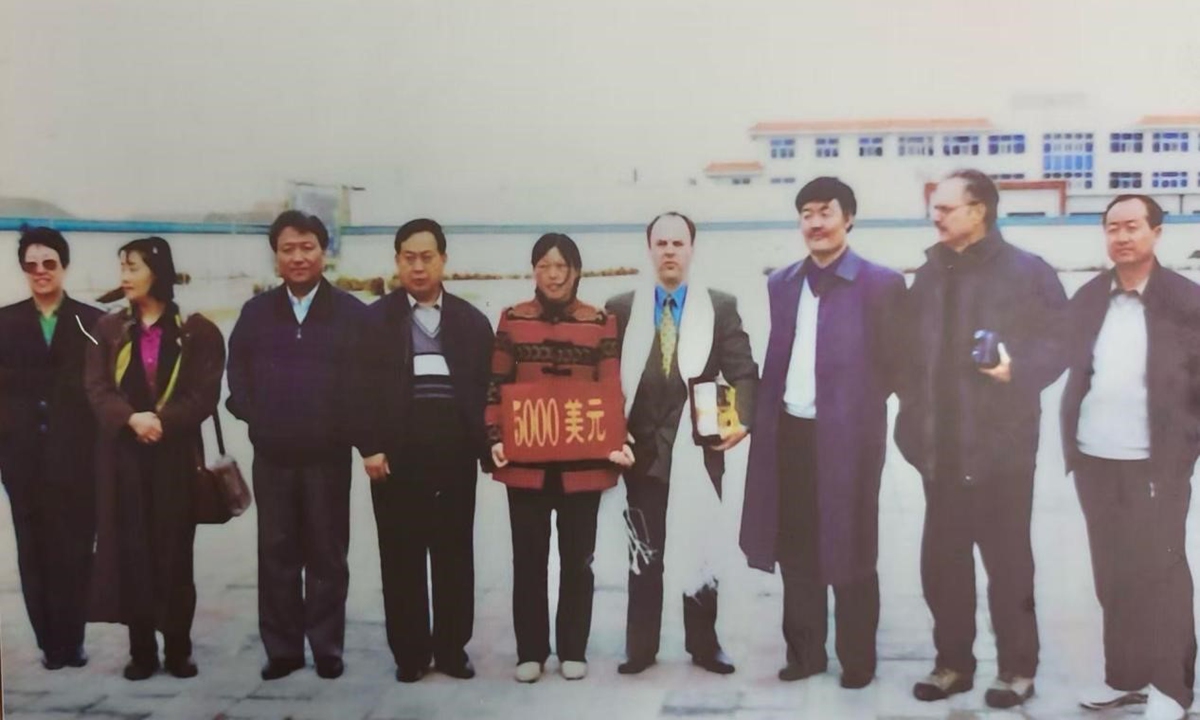
That reunion began with a single act of generosity. In 1999, when Sakolsky arrived in China as a participant in a bilateral teacher exchange program, he was moved by Yin Yuzhen and her husband's tireless efforts to curb desertification in the Mu Us Desert in Inner Mongolia. He raised $5,000 to fund their local tree-planting initiative. The young saplings bought with the donation have since matured into more than 50,000 full-grown trees, transforming the once desolate, sandy wasteland into a thriving green landscape.
After decades of lost contact, Yin, a national model worker renowned for her desert restoration achievements, launched an online search for her American benefactor in May, hoping to reconnect with the man who helped launch her lifelong desert reclamation mission.
What followed was a remarkable wave of online support: within less than 48 hours, a nationwide search had tracked Sakolsky down. That swift effort led to their long-awaited virtual reunion, a video call that brought them face to face for the first time in 27 years.
Asked what he is most looking forward to about this journey, Sakolsky told the Global Times that "I want to see Ms Yin, see the forests, see the students I have not seen for almost 30 years, my colleagues. I want to see the Chinese people."
The trip itself felt like a dream he never thought would come true, he added.
Now, the dream is about to come true. Later on Sunday, Sakolsky will fly to Ordos, Inner Mongolia, the site of the transformative environmental project that bound his fate with Yin's all those years ago.
During his China visit, Sakolsky will join Yin in a new tree-planting activity. He will also hold exchanges and discussions with teachers and students from the Luoyang No.2 Foreign Language School where he once taught, and participate in official China-US teacher exchange events, according to the Xinhua News Agency.
As he prepares to see the transformed landscape with his own eyes, Sakolsky shared with the Global Times about how much China itself has changed over the past two decades. From photographs, he said, he had already seen the barren desert he remembered turn into lush green forests; he had also heard that Luoyang has become far more vibrant and beautiful.
"Hopefully the message gets out to the world that Chinese and Americans can work together and make a peaceful world," he said.
。 当前,高温、暴雨等极端天气多发,用电负荷大幅攀升,工贸企业火灾、触电、中毒窒息风险显著上升。部分企业为节能降耗加大夜间生产强度,人员疲劳、夜间视野受限等因素叠加,机械伤害、高处坠落事故进入易发期。

B | 为有效防范化解工贸企业8月份突出安全风险,应急管理部向工贸企业发出安全生产工作提示,严防六类生产安全事故,并加强“厂中厂”“园中园”安全治理。

C | 一是严防有限空间作业中毒窒息事故。

D | 要严格落实有限空间作业审批制度,作业前必须对有限空间气体浓度进行检测,作业现场必须配备安全防护和应急救援装备,设置专职监护人员,严防有限空间作业事故发生。 二是严防高温熔融金属遇水喷爆事故。要定期检修熔炼炉等炉体水冷装置,避免冷却水泄漏进入炉内接触高温熔融。 三是严防触电事故。要对电气线路、开关、配电箱、用电设备等开展全面排查,重点整治线路老化、绝缘破损、超负荷运行等隐患。 四是严防机械伤害事故。要严格执行作业前安全确认,落实岗位责任制和岗位操作规程,加强光栅、急停、防护罩等安全防护装置排查整治。 五是严防高处坠落事故。

E | 要严格落实高处作业审批制度,强化作业人员安全教育培训,规范佩戴安全帽、安全带等劳动防护用品。 六是严防危险化学品燃爆事故。涉及危化品储存、使用的工贸企业要严格落实降温、通风、远离火种等措施,严控高温环境下危化品泄漏、燃爆风险。 同时,各地区要加强工业“厂中厂”“园中园”安全治理,进一步摸清风险底数,压实出租方承租方安全管理责任,督促出租方严格落实统一协调管理责任、承租方严格落实安全主体责任,严禁堵塞疏散通道、非法违规生产经营、违法违规施工改造,严格动火作业安全管理,坚决防范火灾、爆炸、坍塌等事故发生。(记者 刘温馨)。

F |
Current article:http://www.minshixuanhabing.bond/sf39h/8mo.html
Published on:08:41:42


