西游・降魔篇
Japanese govt mulls using US’ AI tool for right-wing narratives: media_我的网站

一 |
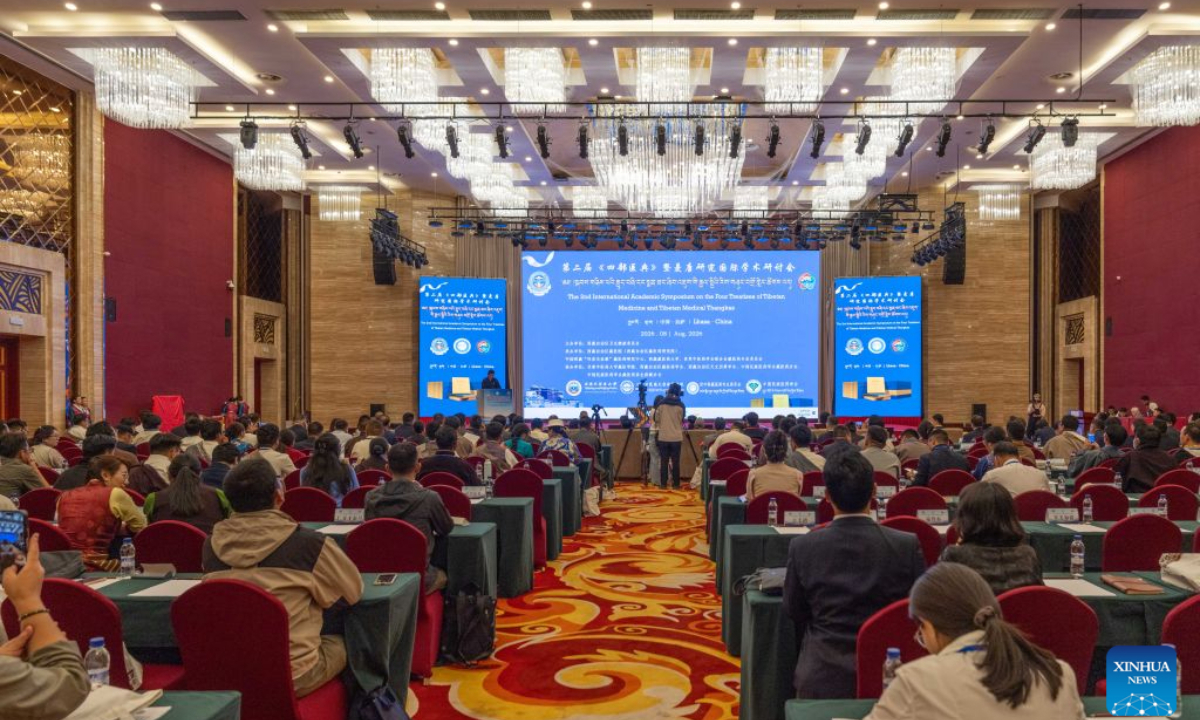
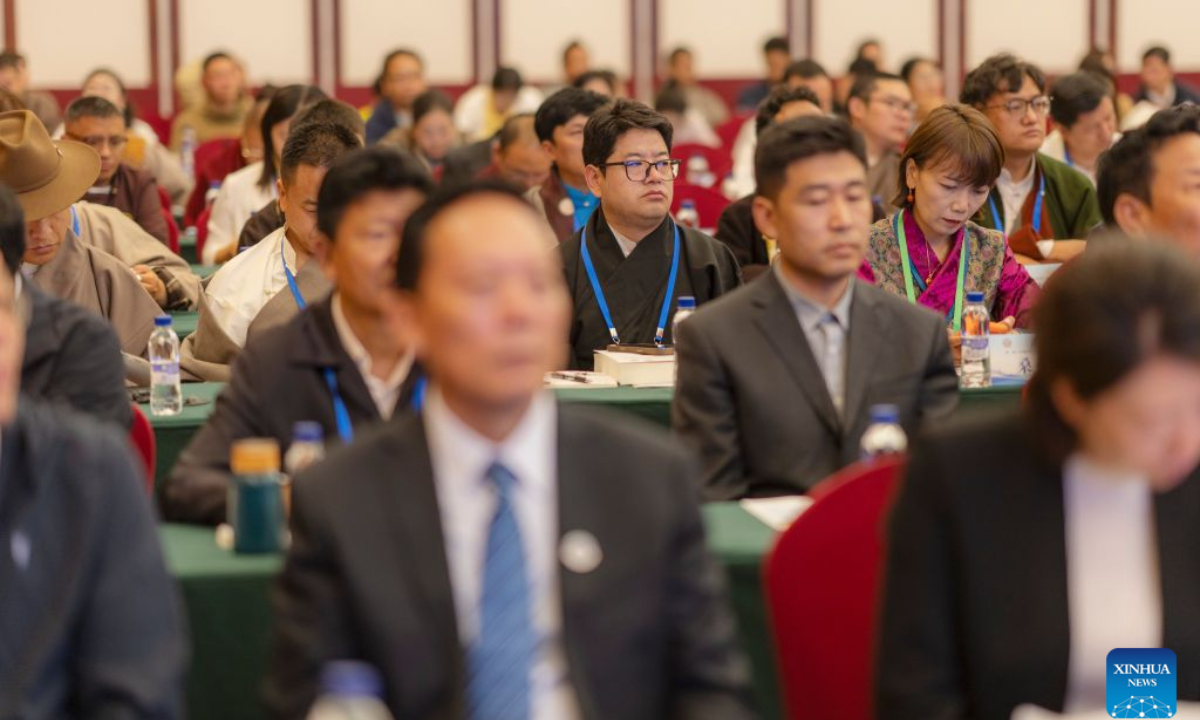
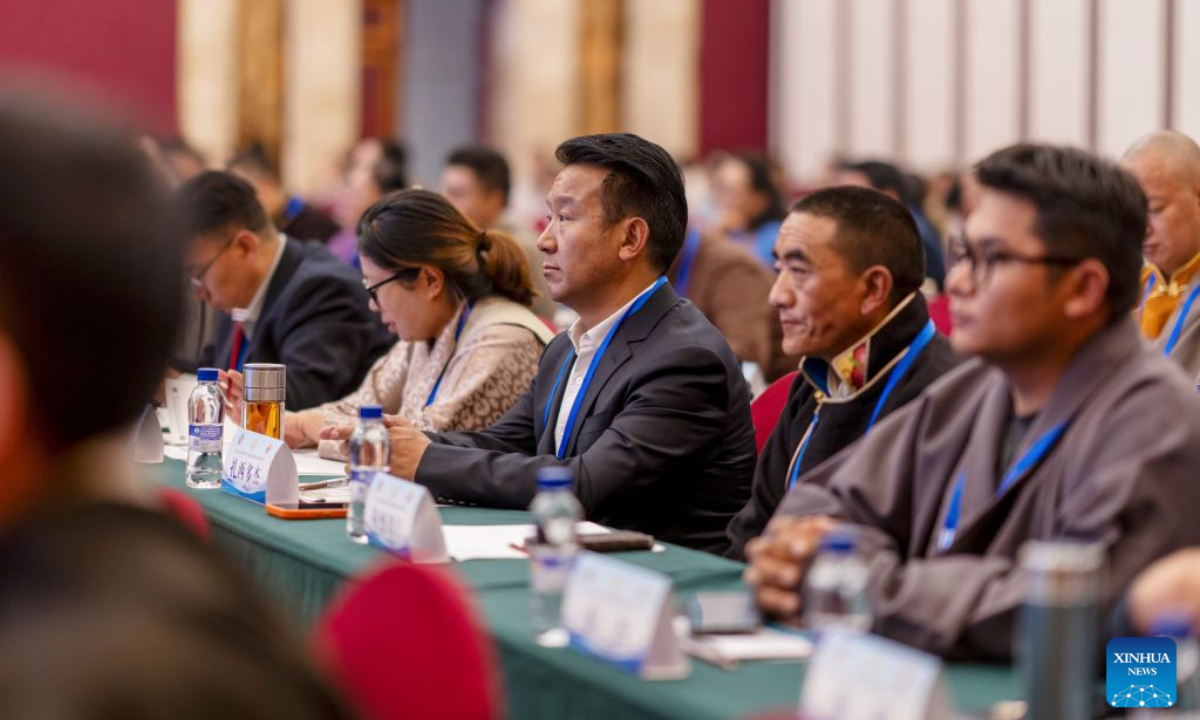
Held in the regional capital Lhasa, the second international academic symposium on "The Four Treatises of Tibetan Medicine" and Tibetan medical thangkas brought together more than 200 experts from China, Britain, Germany, Austria, Mongolia and Nepal.
Discussions centered on the historical evolution of the classic treatises, the iconographic interpretation of Tibetan medical thangkas, and pathways for modern clinical application and international cooperation.
At the symposium, a research center for Tibetan medical thangkas was inaugurated.
Written between the 8th and 12th centuries, "The Four Treatises of Tibetan Medicine" is the most influential foundational work on traditional Tibetan medicine. It was inscribed on the UNESCO Memory of the World Register in 2023.
Based on the work, the 80-scroll Tibetan medical thangkas serve as a visual teaching complement, covering diagnostics, pharmacology, preventive care and medical ethics. The medical thangkas were added to China's national documentary heritage list also in 2023.
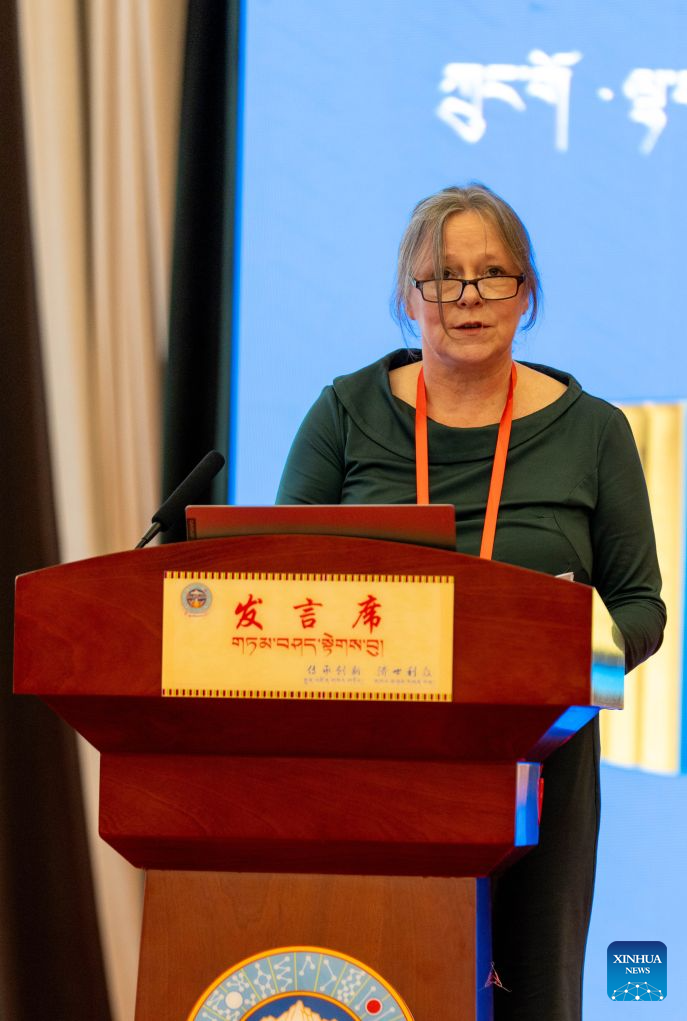
Among the participants was Katharina Anna Sabernig, a lecturer from the Medical University of Vienna, Austria, who first encountered Tibetan medical murals at Labrang Monastery in Gansu Province in 1994. She later returned and began delving deeper into the works.
"I saw these murals and I started to get deeper and deeper and to understand all this," Sabernig recalled.
Mary Caroline Wyatt, a scholar with dual British-Greek citizenship, began collaborating on an English translation of texts about Tibetan medical thangkas last September. She noted that complete English versions have long been scarce.
"Our translations target professional readers so that we preserve many specialized, traditional terms," said Wyatt.
The event was hosted by the regional health commission and co-organized by the regional Tibetan medicine hospital and Xizang University of Tibetan Medicine.
Xizang has formulated and implemented a series of policies on promoting Tibetan medicine and encouraging innovation. According to a government white paper released last year, the region has 51 public Tibetan medicine institutions, employing 5,287 professionals and operating 3,260 beds, up from 28 institutions, 2,232 professionals and 1,364 beds in 2012.
In April, China rolled out its first national recommended standard for ethnic-medicine disease classification and codes for Tibetan medicine.
Tsering, president of the regional Tibetan medicine hospital, said inscriptions on the UNESCO Memory of the World Register and China's national documentary heritage list have brought Tibetan medicine to a broader global audience.
"We will make the most of these opportunities to promote academic exchanges and clinical collaboration worldwide," Tsering said.
。

二 |
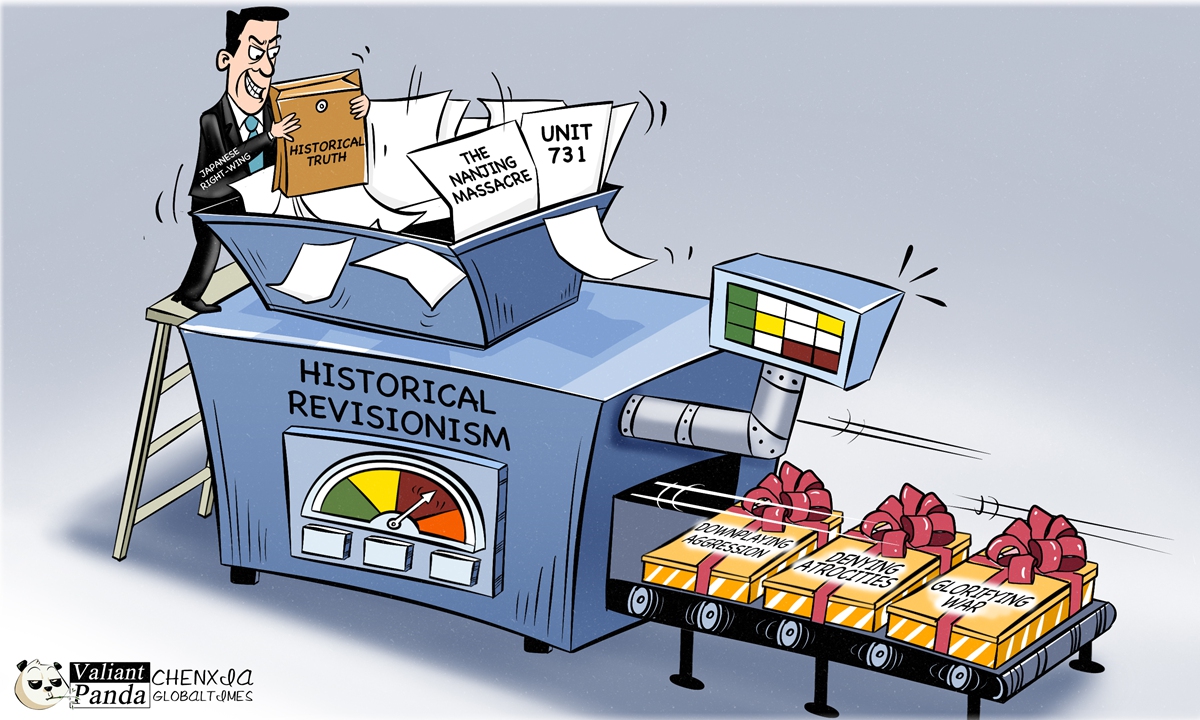
A Chinese expert said the current Japanese government has fueled an anti-China atmosphere by portraying China as a "threat" and using increasingly sophisticated tools, including AI, to shape public opinion and build support for Japan's military expansion. Such moves, he added, appear to echo the tactics of Japan's militarism during World War II.
Gennai has also become part of the Takaichi government's broader AI strategy. Japan's Digital Agency said Takaichi instructed the government in December 2025 to utilize the platform, and will launch a large-scale pilot project targeting approximately 180,000 government employees across all ministries and agencies.This means Gennai may well be ingesting data encompassing erroneous remarks on the Taiwan region, illegal claims over the Diaoyu Dao, and narratives that downplay or even glorify Japan's wartime aggression, Yuyuantantian said.
It is worth noting that Gennai is integrated with American large language models represented by the Claude series developed by US AI firm Anthropic, which explicitly designates China as an "adversarial nation," it added.
Yuyuantantian warned that if politically biased or historically distorted material were incorporated into Gennai-generated government content, such output could eventually become what it called a "high-authority source of misinformation."
Deployed extensively across government administrative work, the AI could feed its outputs into official Japanese publications such as government reports, white papers and policy documents. Labeled as official material, such AI generated content may then be scraped into datasets and treated by other large language models as highly credible source material, it said.
Lü Chao, an expert on East Asian studies and a professor at the Liaoning Academy of Social Sciences, told the Global Times that the Takaichi government has helped fuel an "anti-China" atmosphere by portraying China as a so-called "major security threat," thereby building public support for Japan's military expansion.
Lü added the use of emerging technologies such as AI showed that efforts by Japan's right-wing forces to shape public opinion were taking increasingly diverse forms.
Japan's Asahi Shimbun previously revealed that Japanese right-wing forces have been using artificial intelligence on a large scale to churn out disinformation denying the Nanjing Massacre and claiming Japan treated civilians humanely during its invasion of China.
China's Ministry of State Security then published a commentary in July slamming such acts that trampled on historical justice and human conscience and have drawn fierce criticism from the international community and visionary people in Japan.
Historically, Japan repeatedly used domestic propaganda to stir public sentiment before and during its wars of aggression during World War II. Some members of the current Cabinet appear to be following a similar playbook for the Japanese militarism: distorting facts, stoking confrontation, portraying China as the main threat, and using that narrative to justify military expansion and pursue regional hegemony, Lü said.
"This is an extremely dangerous path, one that bears an unmistakable resemblance to the actions of Japanese militarism in the past," he added.
。
Current article:http://www.minshixuanhabing.bond/list_e9fyrt4/bld.xls
Published on:00:16:49


