深空失忆
贝尔的“空中出租车”出现在CES上。_我的网站

A |
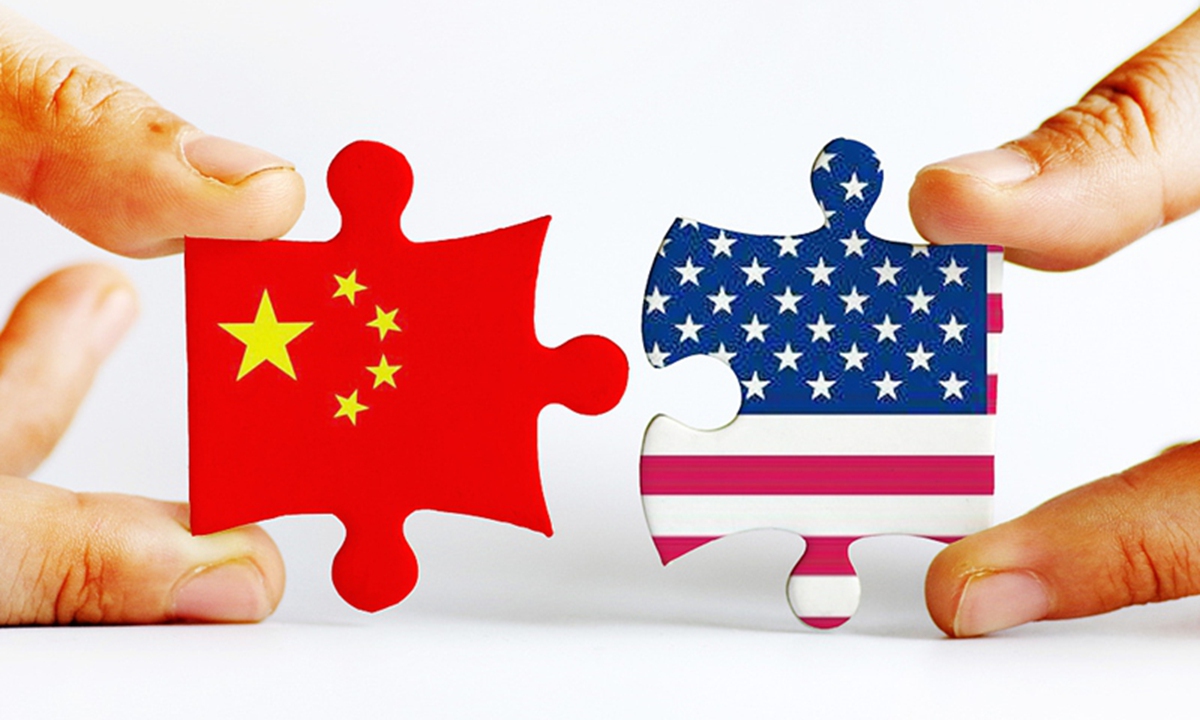
China US Photo:VCGAmerican scientists have voiced opposition to a proposed rule which seeks to ban federal funding for US science collaboration with China, saying that it would instead hurt US interest, the Washington Post reported on Tuesday. Chinese experts also warned that the slew of US restrictions on China-US scientific cooperation is unlikely to deal a fatal blow to China's scientific development, but could instead backfire on the US.
The proposed Office of Management and Budget (OMB) rule, set to take effect in December, would mark one of the biggest overhauls of US science funding in decades, giving political appointees greater authority over grant awards previously guided by scientific peer review and requiring that they "advance the President's policy priorities," according to the Washington Post.
It would also effectively expand the 2011 Wolf Amendment, which bars scientists from using NASA funding for bilateral collaborations with China, to all federal agencies and scientists receiving federal funds, marking the largest break in US-China scientific engagement in decades, the US media outlet reported.
So far, the proposed rule has garnered nearly half a million public comments, many from scientists and leading US science bodies. A Washington Post analysis of 50,000 of those comments found that around 88 percent were negative.
The rule, initially set to take effect in October, was pushed back to December after a bipartisan stopgap funding bill temporarily halted its adoption. Unlike the Wolf Amendment, the rule does not require congressional approval to take effect.
"I do think there are still members of Congress who think we have a monopoly on knowledge. They think we're still in the Cold War Soviet era ... where we were ahead in most areas of science and technology. That is not the case with China. We are no longer the leader in many areas of science," said Tobin Smith, senior vice president for government relations and public policy at the Association for American Universities, which advocates on behalf of leading US research universities, per the Washington Post.
Scientists warn that the rule risks subjecting long-term scientific research to four-year political cycles. "We will not succeed if with every new administration we are ping-ponging back and forth about priorities," the American Association for the Advancement of Science said in a blistering comment, urging the administration to withdraw the rule. "Fast-tracking such profound changes ... hands an easy victory to nations like China," it said, the Washington Post reported.
This reflects a fundamental divide between the US government and the scientific community over how science should develop, Wang Yiwei, a professor at Renmin University of China's School of International Studies, told the Global Times. He noted that politicians tend to believe that suppressing China as a competitor would allow the US to preserve its market dominance and technological edge.
Scientists, however, tend to follow a different logic, as scientific progress depends on openness, exchanges and collaboration. If science and technology are driven solely by competition and private capital, with the ultimate goal of maintaining technological monopolies, this could create greater risks and ultimately undermine US interests as well, Wang said.
The proposed rule change is the latest salvo in a broader battle in Washington over how to respond to China's rise as a scientific superpower. In July, the US National Science Foundation (NSF) also moved to ban collaborations between scientist it funds and many Chinese research institutions and their employees, according to Science magazine.
Liu Shaoshan, director of the Center for Embodied AI at the Shenzhen Institute of Artificial Intelligence and Robotics for Society and a former US-based researcher, told the Global Times in a previous interview that the NSF's new proposed rules created a "talent wall," arguing that restrictions based on nationality, institutional affiliation, and research partnerships could reduce the global talent pool available to the US, weaken its ability to attract leading scientists, and slow scientific innovation.
Liu also said scientific advancement relies not only on discovery but also on the exchange, validation, and dissemination of knowledge.
Wang also said China has built significant strengths through its vast pool of scientists and engineers, complete industrial chains and massive application scenarios, while increasingly moving from application-oriented innovation toward original research. Against this backdrop, US technological blockades and restrictions on cooperation are unlikely to halt China's progress, but could instead isolate American scientists from China's latest research and collaboration opportunities. Such an approach could also prevent the two countries from leveraging their respective strengths and ultimately undermine US competitiveness, Wang said.
。在CES 2019的第一天,极客之选的前沿报道团队遇到了一位“熟悉又陌生”的朋友。众所周知,贝尔直升机被认为是世界领先的直升机和倾斜翼飞机制造商之一,但这次在CES上贝尔直升机并不是传统的飞机,而是一个相对新的技术项目“空中滑行”。一个背景信息是,去年贝尔直升机更名为贝尔,它删除了后缀“直升机”,还发布了一个全新的战略和品牌标志。

B | 事实上,这也反映了贝尔希望除了现有的直升机业务外,积极探索更加多样化和未来的出行方式。还记得,在去年年初的CES 2018展会上,贝尔展示了一个新的空中出租车项目,并当场展示了其先进的车厢内部系统。驾驶舱基于按需旅行服务(ODM)的概念。

C | 官员们认为,驾驶舱的经验将超过现有飞机产品的经验(机舱设计见下图)。一年后,贝尔在CES 2019上宣布了更多的空中出租车项目的技术细节。这次展览还将驾驶舱内部系统升级为更完整的空中出租车结构,使我们能够进一步了解这一非常前沿的智能出行方式。贝尔在CES的展台位于LVCC北厅,通常被称为“北亭汽车区”。

D | 不得不说,在许多自动驾驶汽车中,贝尔的出租车确实引人注目,而且现场也能看到许多好奇的媒体记者在了解产品的细节。

E | 这是拉斯维加斯的极客选择现场报道。

F | 贝尔发布的空中出租车的全尺寸设计被命名为Nexus,我相信很多数码爱好者会感觉非常友好。具体来说,Nexus被定义为VTOL混合气出租车,带有贝尔标志性的倾斜转子设计和六个倾斜风管风扇。官员们说,它可以提供安全和高效的空中旅行体验。Bell Nexus的混合动力设计可以让它更长的耐久性和负载能力。Nexus可以载5个人,载重量为600磅。您还可以通过上图看到右侧的加注口。我们也进入了贝尔尼克斯的内部客舱进行体验。五个座位按2-2-1的排列。前排座椅是驾驶员座椅,但是你看不到传统直升机的控制部件。

G | 相反,现代仪表系统可以实现未来的自动驾驶功能。令人印象深刻的是,贝尔·尼克斯的座椅非常舒适,就像坐在豪华轿车里一样。据《边缘》外国媒体报道,全世界有19家公司在研究飞行汽车/出租车,其中包括一些大型航空公司和许多新成立的公司。

H | 贝尔公司在倾转旋翼技术方面积累了大量的经验,与波音公司合作开发的V-22已经服役多年。据官方介绍,贝尔在航空业的积累也是其优势所在:贝尔耐克斯由贝尔设计、开发和制造;其他合作伙伴包括赛峰、EPS、泰利斯、穆格和加敏。其中,赛峰为Nexus提供混合动力解决方案,EPS提供储能系统,泰利斯提供飞行控制计算机(FCC)硬件和软件,Moog提供飞行控制动作系统,Garmin负责集成航空电子系统和飞机管理计算机。据现场工作人员称,贝尔·尼克斯预计将于2025年左右出现。值得一提的是,贝尔也是Uber空中出租车项目的合作伙伴,制造商和服务提供商之间的合作将加速这一概念的实现。也许将来飞去上班并不遥远。”随着地面交通越来越拥挤,我们必须在三维空间中寻找新的交通解决方案来应对当前的挑战。我们非常自豪地向业界宣布,备受期待的空中出租车现已正式启动。我们相信,随着基础设施的不断改善,Bell Nexus空中出租车将在全球取得成功。

I | ”贝尔公司总裁兼首席执行官米奇•斯奈德对Nexus公司充满信心。
Current article:http://www.minshixuanhabing.bond/4uumj/ryqtp.html
Published on:15:51:42


