
东野圭吾推理系列
两岸青年共探工艺文创新路_我的网站

A |
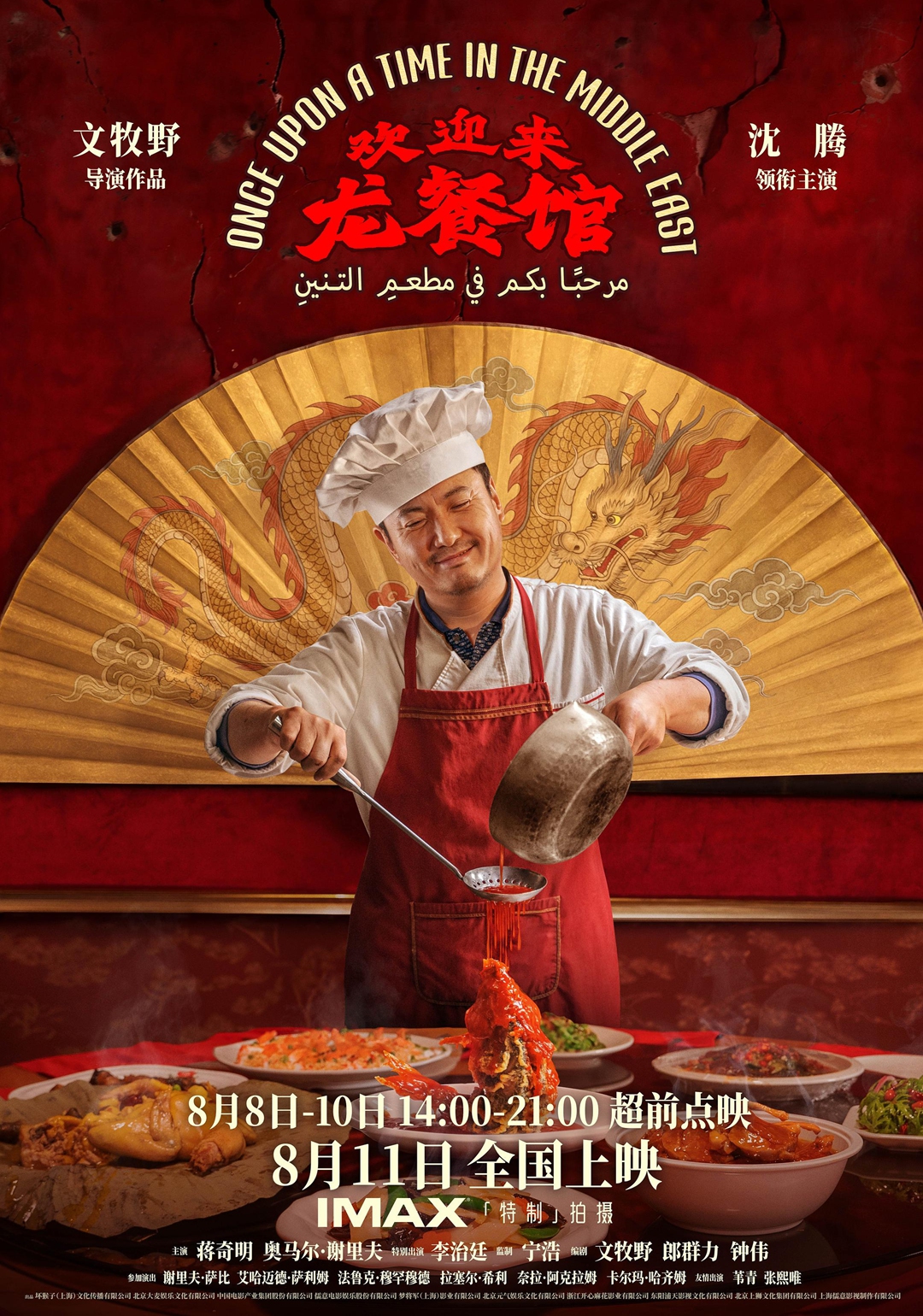
The excitement is understandable. Director Wen Muye has made something quietly radical: a war film that refuses spectacle.
There is a wedding scene in Once Upon a Time in the Middle East that stays with you long after the credits. In the middle of a war zone, people still find a way to dance, embrace, and cry as if tomorrow will never come. The joy is desperate and beautiful at the same time. Watching it, you feel the ache of a simple truth: These people should have been allowed every tomorrow. That single sequence captures what director Wen Muye has achieved. He has made a film that only a Chinese filmmaker could have made - because of a sensibility that refuses to treat war as spectacle or moral theater.
The commercial response in China has been equally striking. During the past weekend the film took in 373 million yuan ($55.35 million) at the box office, over 4 times the amount earned by Christopher Nolan's The Odyssey in the same market. Audiences walked out of the theater talking about war, food, and the value of ordinary life. The numbers confirm what the film itself demonstrates: a story told from the kitchen can still command a massive audience.
The story follows Xu Fu, an ordinary Chinese chef who travels to a Middle Eastern city (clearly modeled on Iraq around 2003) to work off family debt. With restaurant manager Ma Junsheng, he opens the Dragon Restaurant and serves Chinese food. Even after the invasion begins, the kitchen does not close. The kitchen becomes a fragile island where meals continue to be cooked while the war begins outside. Xu Fu is not a hero in a Hollywood sense. He does not pick up a gun or deliver speeches about freedom. He just keeps cooking.
What makes the film remarkable is how cleanly it rejects the familiar Western war narrative. Hollywood has spent decades following US soldiers into foreign cities, showing their courage, their trauma, and their brotherhood. Films like Saving Private Ryan and Black Hawk Down place the US experience at the center and often reduce the local population to a background threat or grateful recipients of rescue. Once Upon a Time in the Middle East turns the camera the other way around. It asks a blunt question spoken to an American officer: "Without you, where would the terrorists come from?" The line is not delivered as propaganda. It is offered as a practical observation about cause and effect. Violence creates more violence. Children who lose everything do not become extremists by nature; they do because the options for a normal life have been deprived.
The film makes this point through a recurring image: the knife. In Xu Fu's hands, a knife is a tool for chopping, flipping, and seasoning. It produces the bowl of "Xu Fu stew" that orphans finish and ask for more. In other hands, the same blade becomes a weapon. "The knife is not good or evil," the film suggests. "People are." The same logic applies to the children. Young Saif learns to cook under Xu Fu's guidance, kneading dough, controlling the flame, earning respect through a plate of food. Other kids the same age are packed into cars with bombs instead of books.
Here the Chinese director's approach proves smarter than the Hollywood model. Hollywood war films usually rely on scale, speed, and moral clarity: big battles, clear villains, and a central hero who grows through combat. The camera stays close to the soldiers, the soundtrack swells, and the audience is guided toward admiration or catharsis. Director Wen Muye does the opposite. He stays small, slow, and unresolved. By placing the story inside a kitchen rather than on the front line, he forces the viewer to confront the human cost without the distraction of heroic spectacle. Instead of telling us who is right, he shows us what is lost. This restraint is more demanding and ultimately more persuasive. It trusts the audience to connect the dots rather than feeding them a pre-packaged moral. Where Hollywood often ends with a sense of hard-won victory or noble sacrifice, this film leaves you with the quieter, harder realization that the real damage continues long after the shooting stops: in the minds of children and in the broken routines of daily life. That choice of focus is not just different; it is more honest and more intelligent.
This perspective feels especially Chinese in its emphasis on ordinary survival. Chinese culture has long treated food as the foundation of life: "Heaven is big, earth is big, but eating is bigger." The dishes in the film, from northeastern iron-pot stews mixed with local grilled fish to carefully prepared fried rice made from whatever ingredients remain, are not exotic decoration. They are the practical language of endurance. One of the most moving moments comes when Xu Fu cooks a simple stew for a group of orphans during their escape. What began as "leftovers not fit for the table" becomes a permanent item on the menu. Anything made with care can feed people. That idea carries more weight than any battlefield speech.
The film's approach to food and daily ritual reminds me of director Ang Lee's Eat Drink Man Woman. Lee used elaborate family dinners to reveal emotional truths that characters could not speak aloud. Wen transplants that same quiet method into a war zone. The kitchen becomes the moral center of the story. Steam, chopping boards, and shared tables matter more than explosions. In both films, cooking is never just cooking. It is a way of insisting that human connection still exists even when larger forces try to erase it.
A quiet but powerful metaphor runs through the story: the potato. A potato is harmless until it sprouts and becomes poisonous. The children radicalized by war are not born poisonous. They become so when the soil around them turns toxic. The film returns several times to the simple instruction "don't waste food." In peacetime the phrase sounds ordinary. In a war zone it becomes a statement about the waste of human lives. War does not only kill people; it spoils what could have been good.
By the final scenes, the Dragon Restaurant has become more than a business. It is a small example that another way of existing is possible. Children are learning to cook instead of learning to kill. The film does not claim this solves geopolitics. It simply shows that the most basic human desire, to eat well and live another day, remains the clearest common language across cultures.
The author is a reporter with the Global Times. [email protected]
。 AI摘要 第十四届海峡青年荟·第二届海峡两岸青年创意交流活动在福州启幕。180余名两岸青年开展玉石文创及畲族非遗研学,通过工艺体验促进文化交流与产业合作。 近日,第十四届海峡青年荟·第二届海峡两岸(福州)青年创意(工艺)交流活动在福州民族中学启幕。180余名两岸青年相聚罗源,开启为期5天的玉石文创和畲族非遗沉浸式交流研学之旅,在工艺体验中感受中华优秀传统文化魅力,共话文创产业合作新机遇。 台胞现场体验雕刻。记者 池远 摄 此次活动以“福蕴罗源·石艺同心”为主题。开幕式上,两岸青年同台展演,共同聆听寿山石雕专题讲堂。当天下午,大家走进罗源滨海玉石文化城工艺实训室体验篆刻技艺,在一刀一刻间感受传统工艺魅力。 第一次来罗源的台湾青年施玟伶告诉记者,开幕式上的畲族文化表演让她感受到当地浓厚的民族文化特色,两岸青年同台演出,大家在互动中很快熟悉起来。“接下来还有很多体验活动,我期待能认识更多大陆青年,进一步了解这里的文化和民俗。

B | ” 来自台湾苗栗的木雕工艺师陈昱蓉则把更多期待放在工艺交流上。她介绍,苗栗三义素有台湾“木雕之乡”美称,当地木雕产业与福州传统雕刻技艺有着深厚渊源。“我希望通过这次机会,近距离学习寿山石雕和篆刻技艺,看看木雕和石雕有哪些相通之处,也把罗源玉石文化、畲族非遗元素带回台湾,融入自己的创作中。” 这是台湾苗栗三义木雕协会副会长黄祈翔第二次参加该项活动。“两岸工艺文化同根同源,大陆玉石雕刻底蕴深厚,台湾工艺则更注重现代设计表达,希望两岸青年在交流中互学互鉴,把罗源历史、畲乡文化和台湾创意结合起来,碰撞出更多文创合作的新火花。” 作为此次活动中最年轻的参与者之一,“00后”台湾青年苏约瑟很关注传统工艺如何走近年轻人。他希望借此机会与大陆青年探讨如何运用新媒体、新设计赋能传统工艺,并把此行见闻分享给更多台湾同学,让更多台湾青年了解两岸工艺文化的深厚渊源。

C | 据了解,本次活动还将组织两岸青年走进畲族村落体验漂漆、畲语、畲药辨识等特色活动,并探访当地特色产业,了解台青创业扶持政策,推动文化交流与产业合作相结合。(见习记者 唐蔚嫱 记者 谢星星)。
Current article:http://www.minshixuanhabing.bond/2ftq67/br1.html
Published on:19:57:01
女超人_Random reading
- 08-26A GT investigation examines the funding, government ties and questionable business practices of seven US entities subject to China’s countermeasures
- 08-26China expands visa-free entry for Kyrgyz, Vietnamese citizens
- 08-23검찰, ‘수면제 비대면 처방·대리 수령’ 싸이 약식기소
- 08-21新款XC60将于6月26日上市 沃尔沃高层专访 做好三件事打造好口碑
- 08-23掌阅科技 2026 年上半年归母亏损 5014.18 万元,同比减亏 68.69%
- 08-22台湾京剧名家魏海敏:“梅兰芳京剧团是我在大陆的家”
- 08-20Exclusive: "He Used to Pamper Me..."- When Rajveer Deol Spoke About His Grandfather Dharmendra
- 08-20国台办批民进党操弄抗中保台诬蔑大陆介选
- 08-232025粤港澳车展:售价15.49万元起 新款smart精灵#1正式上市
- 08-25Highest-altitude Yellow River hydropower station sets record

神雕侠侣古天乐版_Active users
- “十五五”时期我国将促进6G产业成熟和生态构建,“十五五”时期我国将促进6G产业成熟和生态构建
- 财政部:7月份全国共销售彩票875.71亿元
- Xi to attend SCO summit, pay state visits to Kyrgyzstan, Egypt
- 存在排放危害风险 奔驰召回部分进口A级/CLA/GLA
- Is 3 Idiots Getting a Sequel? Here's What We Know
- Pankaj Tripathi and Ajay Rai Confirm Perfect Family Season 2
- HYTE Y50 RGB 机箱海外上市:三面玻璃,含 4 风扇 99.99 美元
- 山西奔驰女司机碾压孩子后续:遭奔驰女司机碾压男童被下病危通知
- Nolan's 'The Odyssey' packs IMAX theaters as fans take high-speed trains for better screens
- 10k Star!开源Coding Agent Harness仅用117MB运行10个会话,还能修改自身源码
- China approves first-ever drug for acute mountain sickness prevention
- China logs nearly 1 million consumer complaints in H1, with AI services a growing concern
- 割肉!库里卖掉了位于湾区的庄园 持有6年小亏90万美元!
- 航旅融合激活湖南张家界暑期文旅热潮,航旅融合激活湖南张家界暑期文旅热潮
- 迪马:因教皇去世,意杯半决赛次回合米兰德比也面临推迟风险
- 绿色转型,共创未来 上海市闵行区工商联虹桥商务区商会聚焦ESG,助力企业可持续发展
- 竞争特斯拉Model Y Performance!凯迪拉克Optiq-V官图正式发布
- 台风防御“两直一白”信息提示
白莲花_Hottest this week
- 东野圭吾推理系列 copyright
- Some of the content comes from the Internet. If you have any offence, please raise it.